The Scent Library
Every candle we pour, described the way we'd describe it to you across the counter on Hickory Street. What it smells like. What it doesn't. Who tends to love it and who sends it back.
How to read our notes
Perfumers split a scent into three parts. It sounds fussy, but it's useful, because a candle doesn't smell the same at minute one as it does at hour three. Here's what we mean when we use the words.
-
Top
What hits you when you lift the lid and in the first ten minutes of burning. Light, fast-moving molecules — citrus, herbs, anything sharp or green. They burn off first. If a candle smells great cold and flat after an hour, the top notes were doing all the work.
-
Heart
The middle of the burn, roughly thirty minutes in, and the part you'll actually live with. Florals, spices, tea, fruit. This is where we spend most of our testing time, because it's what fills the room on a Tuesday evening.
-
Base
Heavy, slow notes that linger after you blow it out — woods, resins, vanilla, smoke. Base notes are what people mean when they say a candle "stays in the house." Too much and it gets cloying. Too little and the room goes quiet the moment the flame does.
We list our oil load too. Every candle is poured at 8% fragrance in 100% soy wax, which is near the top of what soy will hold cleanly. Above that, oil sweats out of the wax and the wick starts to struggle.
Year-round scents
These six are always in stock. Each one is poured in a 9 oz amber glass jar with a single flat-braid cotton wick, and each burns about 50 hours.
Cedar Smoke
Top: dry juniper, a thin line of black pepper. Heart: Texas cedar, cypress. Base: birch tar, vetiver, a touch of smoked vanilla to keep it from going ashy.
Our best seller and the one people buy twice. It smells like a cold-weather fire that's been out for an hour, not a bonfire at full roar. Woody and dry, more forest floor than cologne.
What it is not: it is not a sweet "campfire s'mores" candle, and there's no leather or tobacco in it. If you're after something plush and warm, this will read as too austere.
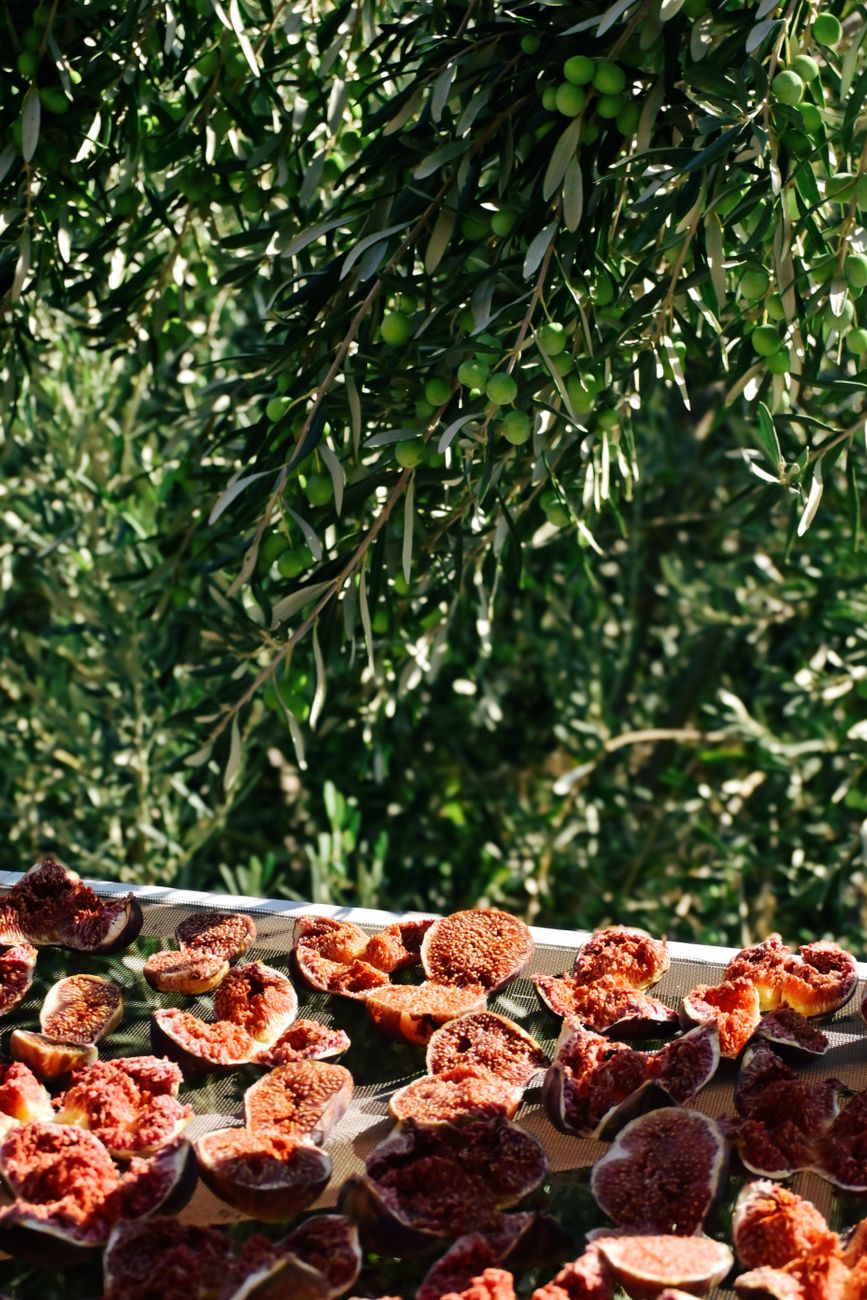
Fig & Black Tea
Top: bergamot, green fig leaf. Heart: black tea, ripe fig flesh. Base: cedarwood, a little musk.
The green fig-leaf note up top is the whole point — it keeps the fruit from going jammy. Clean and a bit bitter in the best way, like tea left to steep thirty seconds too long. Good in kitchens and small offices.
What it is not: not a dessert candle. No cream, no coconut, no fig-and-brown-sugar situation. Several customers expected sweeter and were surprised; we'd rather tell you here.
Texas Bluebonnet
Top: cut grass, lemon peel. Heart: soft blue floral, violet leaf, a trace of honey. Base: white musk, clean oakmoss.
Real bluebonnets barely smell like anything, so this isn't a reproduction — it's what the ditch beside Highway 377 smells like in April. Green, open, faintly sweet. Our lightest scent and the easiest one to live with daily.
What it is not: not a heavy perfume floral. There's no rose, no jasmine, nothing powdery. People hunting for a big bouquet candle find this one too quiet.
Pecan Orchard
Top: toasted pecan shell. Heart: brown butter, cinnamon bark (a dusting, not a dessert). Base: bourbon vanilla, sandalwood.
The warmest thing we make year-round. It gets the "did you bake something?" question more than any other candle on the shelf. Nutty and buttery with just enough wood underneath to keep it grown-up.
What it is not: it isn't pie. No crust, no maple syrup, no whipped topping note.
Rain on Hot Pavement
Top: ozone, wet stone. Heart: geranium, mineral salt. Base: grey amber, damp concrete accord.
A petrichor candle, and the oddest one we sell. It smells like the first ten minutes of an August storm in North Texas. Half of people love it instantly, half don't get it. We keep pouring it because the half who love it come back every season.
What it is not: not "fresh linen," not laundry, not a blue aquatic. There is nothing soapy here.
Mesquite & Honey
Top: orange blossom. Heart: mesquite wood, raw honeycomb. Base: beeswax absolute, tonka.
Sweet but dry, with that slightly resinous edge mesquite has. The honey reads as comb and wax rather than syrup. A good bedroom candle and a very easy gift — it's the one we hand people who say "I don't know what they like."
What it is not: not a barbecue smoke scent, despite the mesquite. No char, no spice rub.
Seasonal and limited pours
We pour these in runs of 120 to 200 jars and stop when the oil runs out. Dates shift by a week or two depending on how the studio schedule falls, but this is roughly when to watch the shop.
- Peach Pit & Basil
- Late May through August. Stone fruit, torn basil, a dry green finish. Sells out fastest of the four.
- Pumpkin, Honestly
- September through November. Actual roasted squash and clove, not the coffee-shop version. Less sugar than you expect.
- Norway Spruce
- Mid-November to early January. Cut spruce tips, cold air, a faint orange rind. Our one true holiday pour.
- Wet Cedar (studio run)
- February, if February is rainy. Cedar Smoke's green cousin. Irregular by design — roughly 120 jars, one pour.
If you want a note when one comes back, email hello@emberandoak.co with the scent name and we'll add you to the list for that one. We don't send a general newsletter blast about it.
Scent strength: what soy can and can't do
This is the part most candle sites skip, so here it is straight.
Soy wax burns at a lower temperature than paraffin. That's good for burn time and for a clean melt pool, and it's why we use it. It also means soy carries fragrance more gently. A 9 oz soy candle will comfortably scent a room of about 200 to 300 square feet — a bedroom, a home office, a small living room. It will not perfume an open-plan kitchen-and-den with twelve-foot ceilings. Nothing this size will, no matter what the label claims.
-
For a large room
Burn two jars at opposite ends rather than one in the middle. Two 9 oz candles outperform one big three-wick in our testing, and you get a more even spread of scent instead of a hot spot.
-
Give it thirty minutes
Cold throw — the smell off an unlit jar — tells you very little. Scent builds as the melt pool widens. Judge any candle, ours included, half an hour in.
-
Moving air kills throw
A ceiling fan or an HVAC vent overhead will pull the scent straight out of the room. Move the candle, not the expectations.
-
Your nose adapts
After an hour you stop registering a scent you're sitting in. It's still working — step outside and come back. This is normal and isn't a fault in the candle.
Our strongest throws, in order: Pecan Orchard, Cedar Smoke, Mesquite & Honey. Our quietest: Texas Bluebonnet, then Fig & Black Tea.
Sample discs and the sampler box
Buying a candle blind off a screen is a gamble. These exist so you don't have to.
Sample discs are 1 oz wax rounds, unwicked, poured from the same batch as the full jars. Warm one in a melt warmer, or just leave it in a drawer or a car and let it work cold. $3 each.
The five-scent sampler box holds five discs of your choosing in a kraft box, $14 shipped flat. Order a full-size candle within 60 days and we'll credit the $14 back — just mention the sampler in the order notes and we'll refund it by hand. No code, no account.
Locals: there are open testers of all six year-round scents on the counter at 312 E Hickory St, Suite B. Come smell them. That's free and considerably more fun.
Burn care — getting the full 50 hours
Soy has a memory. How you burn it the first time decides how it burns for the rest of its life.
- First burn
- Let it run two to three hours, until the melted wax reaches the edge of the glass all the way around. Blow it out early and you'll get a tunnel down the middle that never recovers.
- Trim every time
- Cut the wick to about a quarter inch before each light. A long wick mushrooms, smokes, and burns through your wax twice as fast.
- Four hours, then rest
- Don't run a jar longer than four hours at a stretch. The glass gets hot and the wick drifts. Snuff it, let it set, relight later.
- Stop at half an inch
- Retire the jar when half an inch of wax is left. Below that the glass can overheat. Pop the leftover wax out with hot water and reuse the jar.
Frosting — the pale, crystalline bloom you'll sometimes see on the surface or the sides — is soy doing what soy does. It's a sign of unblended, natural wax and it has no effect on scent or burn. We don't add anything to prevent it.
Still can't decide?
Tell us the room, the season, and one scent you already know you like. Jordan reads these and answers them personally, usually within a day.